Comprehensive Guide to Corrugated Steel Culvert & Corrugated Metal Culvert Pipe
Comprehensive Guide to Corrugated Steel Culvert and Corrugated Metal Culvert Pipe
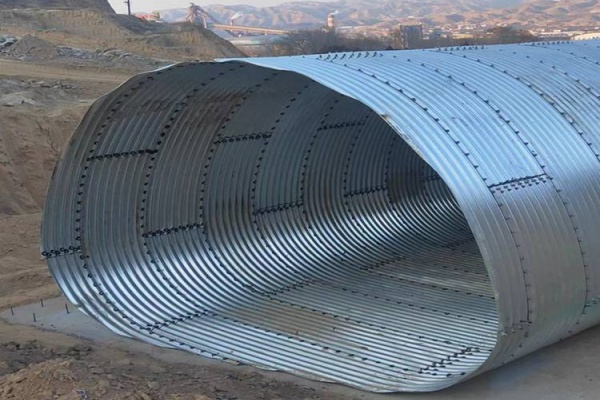
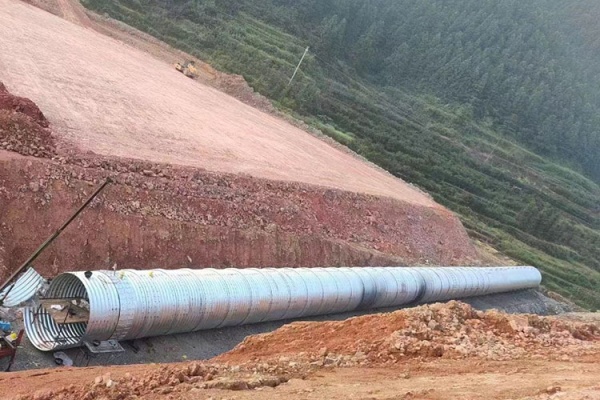
Corrugated steel culvert (also known as corrugated metal culvert pipe, metal corrugated culvert, or steel corrugated culvert) is a flexible corrugated structure manufactured from highstrength hotdip galvanized steel sheet. It is formed by rolling corrugated steel plates into round pipes or by assembling standard halfcircle corrugated steel panels on site or in the factory. These culverts are widely used in highway, railway, mining, tunnel, and water conservancy projects as culverts, underpasses, small vehicular bridges, retaining wall backfill structures, and various underground passages.
Key Structural Features and Performance Advantages
Extremely High Structural Strength The unique corrugated geometry provides excellent ring stiffness and loadbearing capacity. Under the same pipe diameter, the load capacity of a corrugated metal culvert pipe is typically 15 to 25 times that of a reinforced concrete pipe of the same size. It can withstand deep fill (maximum fill height exceeding 30 meters) and longterm heavy traffic loads.
Light Weight – Easy Transport and Handling The weight per unit length of corrugated steel culvert is only **1/10 to 1/5** that of a reinforced concrete pipe of the same diameter. Even in remote mountainous areas with poor transportation access, narrow sites, or lack of heavy machinery, manual handling and assembly are possible. This dramatically reduces transport and onsite logistics costs.
Long Service Life and Superior Durability Standard products are protected by hotdip galvanizing (average zinc coating thickness ≥84 μm, complying with GB/T 13912 or higher standards). In normal atmospheric and soil environments, the service life reaches **80 to 100 years**.In highly corrosive environments (acidic soil, saline soil, areas affected by seawater, etc.), an additional doublelayer asphalt coating (0.3–0.5 mm thick) can be applied, extending the service life by another 20 years or more.Leading domestic manufacturers typically design with a conservative annual wall corrosion rate of 0.01–0.03 mm, and add an extra wall thickness redundancy of more than 0.5 mm, significantly improving the safety margin.
Extremely Fast and Easy Installation
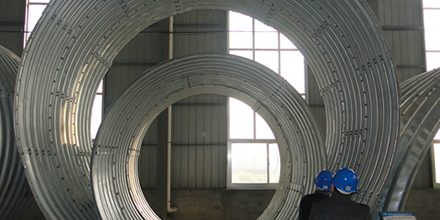
Sleeve connections or highstrength bolted flange joints – reliable and watertight.- **Prefabricated sections:** Pipe sections can be custommade in the factory to required lengths (common lengths: 6 m, 9 m, 12 m). Only simple assembly is needed on site, and nonspecialized workers can perform the work after brief training.- **No heavy equipment required:** The entire installation process generally requires no large cranes, no concrete pouring, and no curing time. Construction speed is very high – typically **50% to 80% shorter** than traditional concrete culverts.
First, after processing, the steel corrugated pipes must undergo anti-corrosion treatment such as hot-dip galvanizing. After all forming and cold-working processes are completed, each corrugated structural steel plate and connecting component shall be hot-dip galvanized, with a zinc coating mass of not less than 1600 g/m² and an average thickness of not less than 84 μm.
Second, the pipe wall thickness is increased by 0.5 mm under the premise of meeting load requirements to enhance durability.
Third, after the culvert pipes are transported to the construction site, the internal and external surfaces of the culvert are carefully inspected. Points where the anti-corrosion coating is damaged are cleaned, derusted, and repaired by zinc spraying. Subsequently, the outer surface of the corrugated pipe (in contact with the soil) is sprayed with epoxy resin on-site. After installation, both the inner and outer sides are painted with two coats of asphalt. However, on the lower inner surface of the corrugated pipe, asphalt is not applied as a composite cement mortar wire mesh needs to be laid there.
Excellent Overall Economy
Total project cost is usually **lower than or close to** that of a reinforced concrete small bridge or culvert of the same span.- Short construction period and high parallelwork capability.- Standardized factory production effectively controls both cost and quality.- Very low maintenance costs after installation – almost no expansion joints, no crack repair needed.- Significantly reduces the use of traditional materials such as cement and aggregates, lowers carbon footprint, and provides outstanding environmental benefits.
Galvanized corrugated metal culvert pipes have been widely used in urban drainage pipe culvert projects due to their advantages such as short construction period, light weight, convenient installation, good durability, low project cost, strong resistance to deformation, and reduced maintenance costs. Analyzing from the essential relationship between material, structure, and function, the use of flexible and high-strength steel corrugated pipes not only has the ability to adapt to foundation and base deformation, which can solve the problem of drainage pipeline damage caused by uneven settlement of the foundation and base, but also, due to the presence of axial corrugations, these metal corrugated pipes exhibit excellent mechanical characteristics. The stress and strain caused by loads are distributed both axially and radially, which can disperse the stress concentration of loads to a greater extent and better leverage the advantages of steel structures. Especially in areas such as high-cold permafrost, soft soil, expansive soil, and collapsible loess, they offer significant economic benefits.
Summary
Corrugated steel culvert and corrugated metal culvert pipe offer a highstrength, lightweight, durable, fasttoinstall, and costeffective alternative to conventional concrete culverts, making them the preferred choice for modern infrastructure projects.



 Products