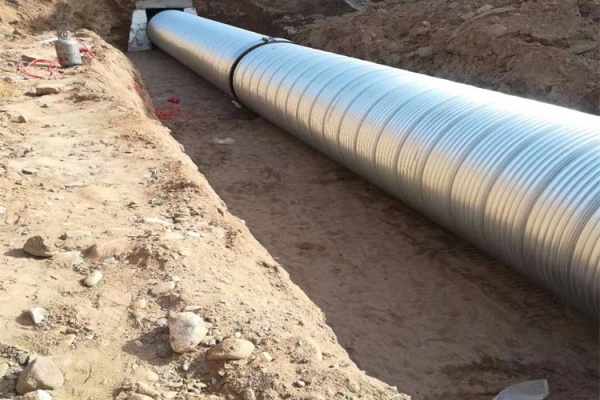
The Installation Advantage Of Corrugated steel culvert : Speed and Simplicity
Streamline Your Project: The Contractor's Guide to Fast, Durable Corrugated Steel Culvert Installation
Cut project timelines & reduce costs. This contractor's guide covers fast CSP sourcing, simplified installation steps, proven backfill compaction methods, and solutions to common field challenges.
For contractors, project managers, and procurement officers, time, budget, and field reliability are the ultimate metrics. Corrugated Steel Pipe (CSP) culverts are more than a drainage product; they are a project acceleration tool. This guide translates engineering benefits into on-the-ground advantages, answering the practical questions builders search for daily.
This guide addresses the core technical queries design teams face, moving beyond product catalogs to provide the analytical framework needed for specification.
Procurement and Logistics: Sourcing the Right Solution Fast
Searches begin with execution: "corrugated steel pipe supplier near me," "large diameter CSP delivery," and "culvert price per foot." To win this initial stage, information must be immediate and logistical
Rapid Sourcing & Specification: Providing clear, filterable product tables with key procurement data is essential. Logistics Support: Highlighting capabilities like just-in-time delivery, on-site technical support, and pre-fabricated headwalls and end sections. This solves the "how do I get it and install it quickly?" challenge.
The Installation Advantage: Speed and Simplicity
The core value proposition for contractors is reduced field time. CSP installation is significantly faster than pouring concrete or placing precast boxes. A clear, visual breakdown of the process answers searches for "CSP culvert installation steps video."
Key steps where CSP shines: Lightweight Handling: Lightweight sections require smaller cranes and crews, enhancing safety and access in confined sites.
No Curing Time: Assembly is mechanical (bolting or banding). Backfilling can commence immediately after placement and alignment, unlike the 7-28 day wait for concrete cure. All-Weather Installation: Can be installed in conditions that would halt concrete work, keeping projects on schedule.
Mastering the Critical Phase: Proper Backfill Compaction
The single most important factor for long-term CSP performance is also a primary contractor concern: "proper backfill for corrugated pipe" and "compaction around culverts." This section must provide unequivocal, actionable guidance.
The "Haunch" Zone: Emphasize that 85% of pipe stiffness comes from proper sidefill compaction. Use diagrams to highlight the critical haunch zones under the pipe's shoulders.
Material & Method: Specify using clean, granular backfill in controlled 6-inch lifts, compacted to 95% Standard Proctor density. Warn against using rocky or frozen material that can cause voids or damage coatings. Avoiding Common Pitfalls: Address FAQs like "how to prevent culvert flotation" during flooding (proper anchoring) and "construction loading over culvert" (maintaining minimum cover during equipment passage).
Solving On-Site Challenges: From Concept to Completion
Finally, content must prove you understand real-world problems. Provide concise solutions to high-volume contractor searches: Challenge: "How to install a culvert under a live roadway?" Solution: Detail the use of pipe jacking or auger boring with CSP, minimizing traffic disruption.Challenge: "Culvert repair options for existing structure."Solution: Showcase CSP as a slip-liner for rehabilitating failing concrete or metal pipes, a massive time and cost saver over excavation. By framing CSP through the lens of project schedule savings, reduced labor and equipment costs, and simplified, reliable construction methods, your content speaks directly to the builder's bottom line. It demonstrates that you provide not just a product, but a predictable path to project completion and profitability.



 Products