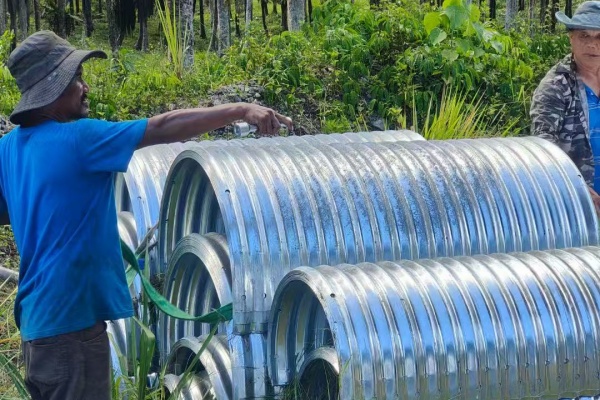
large span corrugated steel culverts are being utilized for drainage, ventilation, river crossing, and other critical scenarios across roads, railways, and bridge projects.
Large Span Corrugated Steel Culvert: Technical Specifications and Engineering Applications
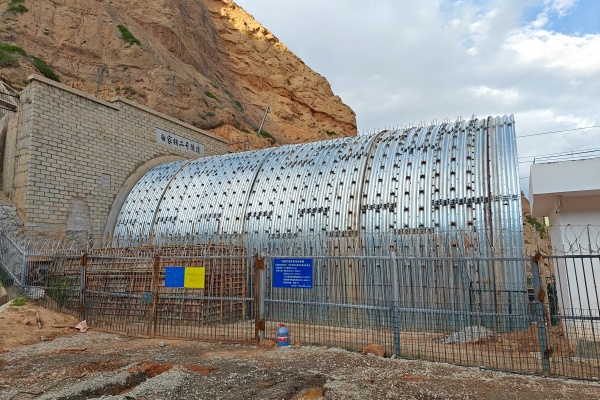
In a construction project in China, large span corrugated steel culverts are being utilized for drainage, ventilation, river crossing, and other critical scenarios across roads, railways, and bridge projects. These structures offer excellent load-bearing capacity and long-term durability, ensuring reliable operation of critical infrastructure.
Project Specifications
The culvert features a span of 15.3 meters and a rise of 10.6 meters, making it a genuine large-span structure. It utilizes a 381×140 mm corrugation profile—a deep-corrugated design that provides approximately nine times the stiffness of conventional structural plate profiles-. The steel thickness is 10 mm, and the culvert length is 10 meters, with a backfill height of 3 meters.
Structural Performance and Load-Bearing Mechanism
Large-span corrugated steel culverts function as soil-steel composite structures. Unlike rigid concrete culverts, where surrounding soil merely transmits loads, these flexible structures engage the backfill soil as an active load-bearing component. The arching mechanism transfers pressure between the corrugated steel plates and the surrounding soil, significantly enhancing structural capacity.
Field studies confirm this performance. In-service corrugated steel culverts with spans exceeding 7 meters have demonstrated that deflections become nearly zero when backfill heights exceed 4 meters. For this project, the 3-meter fill height combined with the high-stiffness 381×140 mm corrugation ensures robust performance under both static and dynamic loading conditions.
Cost and Construction Advantages
Corrugated steel culverts offer compelling economic benefits compared to traditional concrete alternatives. For high-fill sections, the cost per linear meter is approximately ¥3,000 lower than concrete culverts, with post-construction maintenance costs reduced by 70%. The steel structure weighs only one-tenth of a comparable concrete pipe, reducing transportation and hoisting costs by 35%.
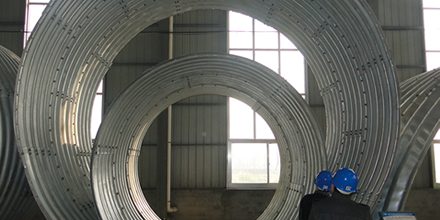
Construction efficiency is equally significant. Factory-prefabricated components are assembled on-site, reducing project timelines by over 50% compared to cast-in-place concrete methods. No heavy machinery is required for installation, allowing civil engineering and culvert assembly to proceed simultaneously.
Durability and Service Life
With proper corrosion protection—typically hot-dip galvanizing combined with asphalt or polymer coatings—corrugated steel culverts achieve a design service life exceeding 50 years. In favorable soil and water conditions, service life can extend beyond 100 years-. The 10 mm steel thickness specified for this project provides an additional corrosion allowance, ensuring long-term structural integrity even in demanding environments.
Conclusion
The 15.3 m × 10.6 m large span corrugated steel culvert represents a technically advanced and cost-effective solution for drainage and crossing applications in modern infrastructure. With its high-stiffness corrugation profile, flexible soil-steel composite behavior, and rapid installation advantages, it offers a compelling alternative to conventional concrete structures for roads, railways, and bridge projects.



 Products