Corrugated Metal Culverts: Complete Guide from Parameters to Engineering Applications
Corrugated Metal Culverts: Complete Guide from Parameters to Engineering Applications
In infrastructure construction sectors such as highways, railways, and municipal drainage, corrugated metal culverts (also known as corrugated steel culverts) are increasingly replacing traditional concrete pipe culverts and slab culverts. They offer a new type of flexible structure with advantages including high strength, light weight, fast construction, environmental friendliness, and low carbon footprint. The application share of corrugated metal culverts in highway culverts has exceeded 30%, with an annual growth rate of more than 15%. This article provides a systematic overview of the technical parameters, application scenarios, core advantages, and construction points of corrugated metal culverts, helping engineers fully understand and select this key modern infrastructure component.
Product Overview of Corrugated Metal Culverts
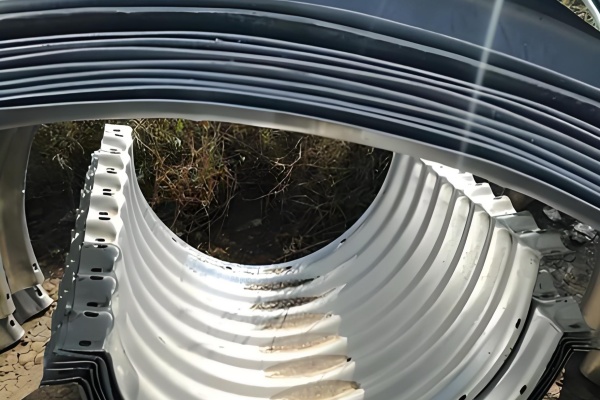
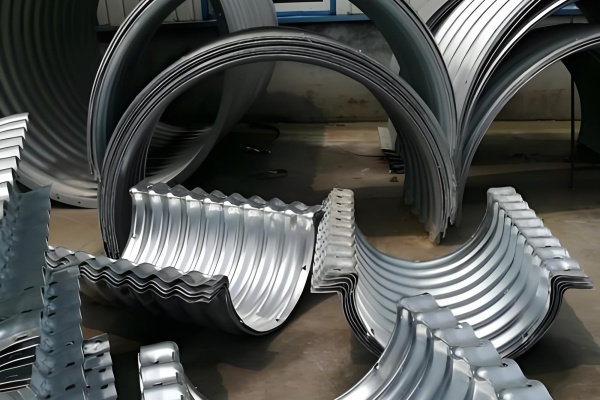
A corrugated metal culvert, also known as a galvanized corrugated pipe or corrugated steel pipe culvert, is a flexible metal structural component formed by cold-rolling or hot-rolling corrugated metal sheets into shape or assembling semi-circular corrugated steel plates. The unique corrugated structure gives the product excellent mechanical characteristics, distributing both axial and radial loads simultaneously, better dispersing stress concentrations, and maximizing the advantages of steel structures.
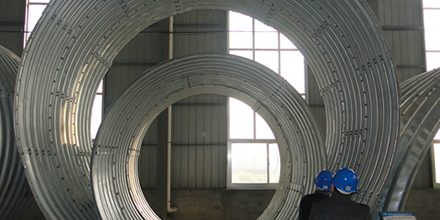
Products are mainly divided into integral type and assembled type. Small-diameter culverts are generally shipped as complete units with flange connections, facilitating transportation and rapid installation. Large-diameter culverts are assembled from split plates with bolted connections, solving the challenges of transporting and lifting oversized spans.
Corrugated metal culverts are suitable for various scenarios: highway and railway culverts, municipal drainage pipes, agricultural water conveyance culverts, mine roadway supports, military emergency works, urban underground utility tunnels, and factory embedded pipelines. Construction time can be reduced by approximately 50–70% compared with traditional concrete structures, and total costs can be lowered by 15–30%. Market demand is growing steadily.
Technical Specifications and Parameters of Corrugated Metal Culverts
The technical parameters of corrugated metal culverts include diameter/span range, corrugation profile, steel plate thickness, galvanized coating thickness, ring stiffness, and soil cover depth. These are the core basis for engineering design and product selection.
Typical Engineering Case: In the Lanzhou Qingzhong section of the G30 Lianyungang-Khorgas Expressway, a CSCP E4000 type corrugated metal culvert (4,000 mm diameter, 55 mm corrugation height, 6.5 mm wall thickness, 52 m length) was used as a flood discharge culvert. Located in a high-fill section, the inlet had wing walls, and the outlet was connected to a 120 m chute draining into an evaporation pond. Before construction, surveyors carefully rechecked the culvert bottom elevation to ensure smooth inlet/outlet drainage. Strict controls were applied to foundation treatment, pipe assembly, and corrosion protection.
Special Geological Conditions: Corrugated metal culverts are especially suitable for permafrost, expansive soil, soft soil, collapsible loess, and areas with sparse vegetation. Their flexible structure adapts well to freeze-thaw cycles, preventing damage from uneven foundation settlement. Successful experimental applications have been made in the Qinghai-Tibet Railway.
(2) Municipal Drainage and Underground Pipelines Corrugated metal culverts are widely used for urban sewer pipes, stormwater drains, and sewage pipelines. Their excellent corrosion resistance and sealing performance make them a preferred choice for municipal drainage projects. Products comply with ASTM A760/A760M international standards and are suitable for stormwater drainage, underdrains, and culvert construction. For high-corrosion environments, metal-coated pipes (galvanized, aluminized, or 55% aluminum-zinc alloy) are available, with additional post-installation asphalt coating if needed.
(3) Retrofitting and Reinforcement of Existing Structures Corrugated metal culverts have unique advantages in the rehabilitation and reinforcement of small bridges and culverts. International engineering practice shows that corrugated steel culverts can effectively replace severely corroded concrete bridges. For example, in a project in Poznań, Poland, a corrugated steel culvert with an 8.9 m span, 7.76 m height, and 1.8 m cover depth replaced a severely corroded concrete railway bridge. Construction was completed without closing the busy railway track. Under live loads, the pipe wall stress was less than 7 MPa and deformation less than 0.5 mm. Long-term monitoring confirmed excellent structural performance.
Domestically, the practice of replacing reinforced concrete culverts with corrugated metal culverts has been well received in many provinces, including Inner Mongolia, Shanxi, Shaanxi, Hunan, Hubei, and Gansu.
(4) Other Special Applications Corrugated metal culverts are also used for underground utility tunnels (common ducts), factory embedded pipelines, temporary access roads, and load-bearing structures for temporary bridges. Their wide range of applications effectively solves problems caused by uneven foundation settlement, complex terrain, and difficult material transport.
Core Technical Advantages of Corrugated Metal Culverts
(1) High Strength Corrugated metal culverts have high compressive strength. Their unique corrugated structure effectively disperses load stresses. The strength of corrugated metal culverts is 1.5–3 times that of concrete pipes, and their compressive strength can exceed that of concrete pipes of the same diameter by up to 15 times. This mechanical advantage allows them to withstand greater soil cover and vehicle loads, making them particularly suitable for high-fill sections and heavy traffic conditions. (2) Light Weight Corrugated metal culverts weigh only 1/15 to 1/5 as much as concrete pipes of the same specification. This light weight greatly facilitates transport and installation – in difficult construction sites or where machinery cannot access, manual handling and installation are possible. (3) Long Service Life With hot-dip galvanized corrosion protection, the service life of corrugated metal culverts can reach over 100 years. In more corrosive environments, a dual protection system (galvanizing + asphalt coating) can be used to further extend life. Later maintenance is convenient; in many environments, no maintenance is required at all, significantly reducing operating costs.
(4) Lower Total Cost For corrugated metal culverts with a span (diameter) of 1 m or larger, the greater the span, the more cost-effective they become. Comparing installation costs for a 2 m diameter pipe, corrugated metal costs about 80% of a concrete pipe. For a 6 m diameter pipe compared with a concrete bridge culvert, the installation cost is about 70% of the concrete structure. (5) Fast and Convenient Construction Corrugated metal culverts require no large machinery on site – only a small amount of manual work is needed for installation. Construction time is reduced by about half, saving labor costs. There is no need for complex foundation work or curing, effectively shortening project duration and saving significant funds. (6) Excellent Adaptability to Foundation Settlement Corrugated metal culverts can be used in situations with significant settlement. Their axial corrugated structure provides good flexibility to accommodate uneven foundation settlement, helping to reduce the “step” between soft-ground structures and the embankment, thereby improving driving comfort and safety.
(7) Environmentally Friendly and Low Carbon Using corrugated metal culverts reduces or completely eliminates conventional building materials such as cement, sand, stone, and wood. This has profound significance for resource conservation and environmental protection. The product itself is recyclable, aligning with green and low-carbon development concepts. (8) Excellent Seismic Performance The flexible structure of corrugated metal culverts gives them excellent seismic resistance, making them particularly advantageous in earthquake-prone areas.



 Products