China Corrugated Steel Pipe Culverts: Cost & Manufacturing Advantages vs Europe
China Corrugated Steel Pipe Culverts: Cost & Manufacturing Advantages vs Europe
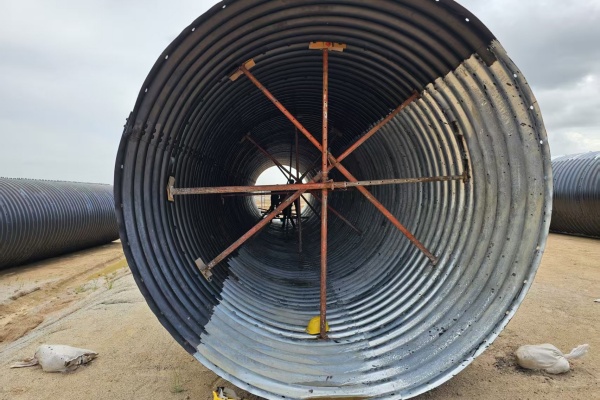
Corrugated steel pipe culverts (CSP culverts) are lightweight, high-strength underground structures increasingly used in global infrastructure. China and Europe are two major markets. Europe once led in technology and standards, but China’s CSP culvert industry has caught up fast, showing clear advantages in price and manufacturing—and in some areas, reaching world-class levels.
Price Advantage: Controllable Costs and Global Cost-Performance Leadership
Factory prices for Chinese corrugated steel pipe culverts usually range from CNY 300–700 per meter for small and medium diameters. Even for large projects, prices including tax, transport, and installation are far below European levels. For example, in a Guizhou highway project:
C4-meter diameter assembled pipe: about CNY 4,400/m including tax 2-meter diameter: about CNY 1,720/m 1.5-meter small diameter: only CNY 1,170/m For export, standard galvanized CSP culverts are quoted at around USD 90/m FOB, while large-diameter products range from USD 480–550/m—highly competitive in international markets.
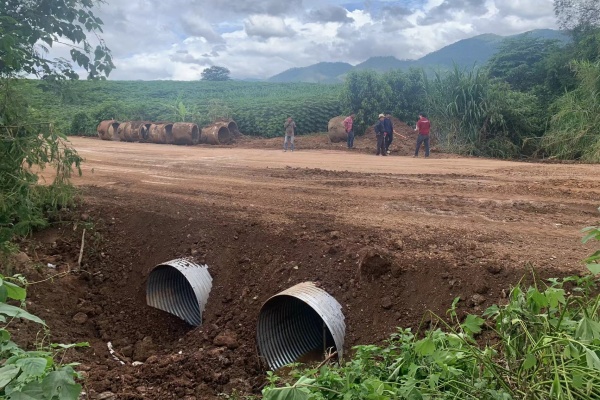
European-made products often cost several times more due to high labor, certification, and standard-compliance costs. Chinese CSP culverts not only have a lower initial cost, but their overall cost is also 20%–30% lower than reinforced concrete culverts. They can save half a month to a month in construction time and reduce later maintenance costs by about 70%. Industrial clusters such as Hengshui give Chinese manufacturers a strong scale effect and a leading position in cost control.
Manufacturing Progress: From Catching Up to Running Side by Side
China’s manufacturing technology for corrugated steel pipe culverts has made major progress. In terms of forming routes, Chinese companies often use “form first, then galvanize”: the steel plate is rolled into a corrugated shape and then hot-dip galvanized as a whole. This allows cut edges and welds to be fully covered by zinc, providing more complete corrosion protection. Europe commonly uses “galvanize first, then form”; although the zinc layer is uniform, cut edges are relatively less protected.
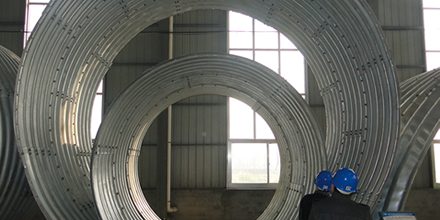
In automation, leading Chinese companies have built 5G-based automated production lines and applied advanced technologies such as laser cutting, laser rust removal, and laser hybrid welding, greatly improving efficiency and precision. Some companies have achieved key processes such as “large wave pitch and one-time flange forming”, reaching internationally advanced levels.
For corrosion protection, China mainly uses hot-dip galvanizing with an average thickness of ≥84 μm. To handle domestic overloading and heavy-load conditions, Chinese manufacturers proactively increase wall thickness by 0.5 mm and apply asphalt coating on site, adapting flexibly to complex environments. The design life can reach 100 years, fully meeting high-standard project requirements.
TIn standards, China follows mature systems such as JT/T 791, supported by ISO 9001 and CCPC certification. This allows parameters to be adjusted quickly according to actual working conditions—offering flexibility that Europe’s more rigid standards may lack.
Comparison with Europe: China’s Advantages Are Increasingly Clear
Europe started earlier, has high automation, and enforces strict standards. However, it no longer holds an advantage in cost, scale, or rapid iteration. With a complete industrial chain, large-scale production, flexible customization, and fast delivery, Chinese corrugated steel pipe culverts are becoming increasingly competitive globally. Leading Chinese manufacturers are rapidly approaching European standards and surpassing them in some areas.
Conclusion: Clear Domestic Advantages and a Promising Future
China’s corrugated steel pipe culvert industry has moved from technology introduction to independent innovation. It now offers outstanding price advantages and significant manufacturing progress. For budget-sensitive and complex projects, Chinese products deliver excellent value. For high-standard projects, leading domestic manufacturers can also provide solutions comparable to European ones. As technology continues to upgrade and exports expand, China’s CSP culvert industry is moving from “catching up” to “running side by side” and even “leading” in some fields—contributing Chinese strength to global infrastructure.



 Products