oosing the right corrugated steel pipe (CSP) model is a critical decision for procurement professionals in infrastructure projects.
The Ultimate Guide to CSP Specifications: Key Models and Selection for Buyers
Choosing the right corrugated steel pipe (CSP) model is a critical decision for procurement professionals in infrastructure projects. It directly impacts budget, structural integrity, and construction timelines. This guide decodes the most common CSP culvert specifications and provides a clear framework for selection, ensuring you source the optimal product for your project's needs.
Understanding Main CSP Product Series and Specifications
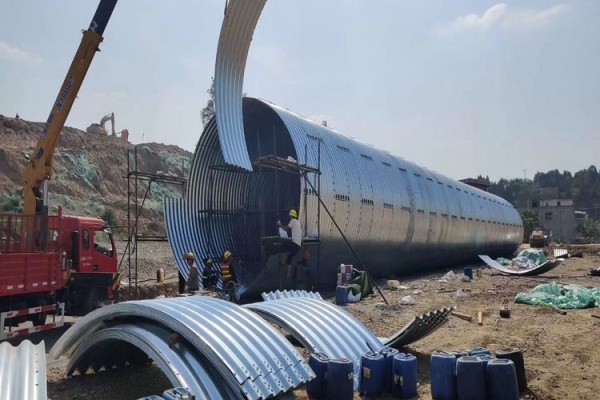
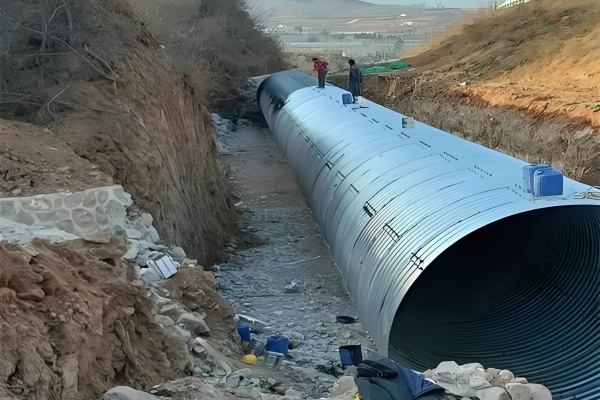
Corrugated steel pipes are primarily categorized into two series based on manufacturing and installation: factory-made structural plate pipes and field-assembled pipe arches. The "model" refers to the corrugation profile, while "specifications" detail the inner diameter/span, plate thickness, and more. Here is a summary of common models and specs based on industry standards
Key Parameter Breakdown:
Corrugation Profile: A notation like 200x55mm indicates a 200mm pitch and 55mm depth. A greater depth increases the section's moment of inertia, enhancing resistance to deformation—ideal for deep fill or heavy load conditions.
Material & Coating: The base steel is typically Q235 or Q355. The standard anti-corrosion treatment is hot-dip galvanizing. Procurement specifications should require a minimum zinc coating mass of 600g/m² (approx. 84µm average thickness). For corrosive environments (coastal, saline soil), specify enhanced coatings (like aluminized zinc) or additional asphalt/polymer coatings. Jointing Method: Factory-made pipes often use flanged or spigot-and-socket joints. Field-assembled pipes use high-strength galvanized bolts—pay attention to the bolt grade (e.g., 8.8) and the durability of sealing materials.
Conduct a Total Lifecycle Cost Analysis:
Transportation Limits: For remote or access-restricted sites, the bundled-plate transport of field-assembled (CSPS) series offers a significant advantage. Project Schedule: When installation speed is prioritized, factory-made (ACSP) series should be considered firstDo not compare only the initial unit price. Field-assembled structures may have a slightly higher product cost but can save significantly on transportation, foundation concrete, and are more adaptable to non-standard designs. Evaluate the total cost encompassing product, transport, installation, and long-term maintenance.
Key Points for Procurement Documentation
To ensure quality, clearly specify the following in your tender documents or technical agreements: Governing Standards: Cite relevant national/industry standards for products and design (e.g., GB/T 34567, JT/T 791)
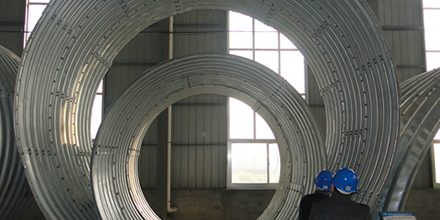
Main Machines: CNC Punch Machine or Laser Cutter
Material & Process Requirements: Define steel grade, galvanizing standard (refer to GB/T 13912), coating system, and thickness inspection method. Quality Control & Inspection: Require suppliers to provide material certificates, galvanizing test reports, and third-party product inspection reports. Key dimensions (diameter, corrugation depth, plate thickness) and bolt torque should be listed as on-site inspection items.
Conclusion and Next Steps for Buyers
The factory-made pipe and field-assembled structural plate pipe series represent the mainstream choices in the CSP market. Successful procurement hinges on matching the project's structural needs, site constraints, and total cost objectives with the correct specifications and a reliable supplier. This guide provides a clear path for your sourcing decisions. To refine your search further, identifying specific project parameters (like span, cover depth, load rating) and environmental conditions will allow for more targeted model recommendations and supplier evaluations.



 Products