What else do you need to know about corrugated metal culvert and corrugated steel culvert for bridges?
What else do you need to know about corrugated metal culvert and corrugated steel culvert for bridges?
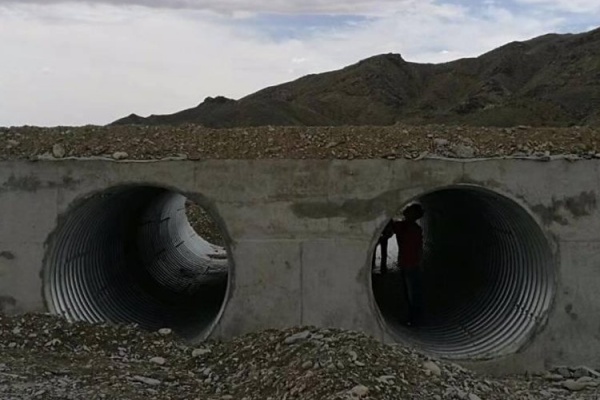
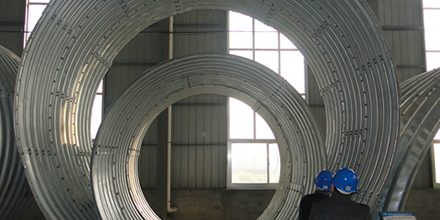
Corrugated metal culvert (or corrugated steel culvert) is a cylinder-shaped thin-wall folded shell with multiple horizontal It is elastic and can move under pressure, axial force, lateral force, or bending moment.
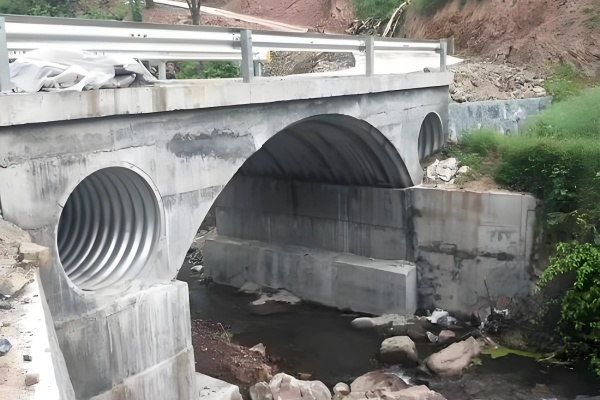
For bridge use
After finishing the assembly of corrugated steel culvert, use a torque wrench to tighten all bolts with a torque of 135.6–203.4 N·m. Do it in order and don’t miss any. After tightening, mark the bottom bolts with red paint. All bolts, including longitudinal and ring joints, should be tightened before backfilling to make sure the overlapping parts of the corrugations fit tightly together.Corrugated steel culvert has good heat and cold resistance. Even at -30°C, it still has good toughness and very high strength. It can be used for a long time in temperatures from -50°C to 80°C. With special resin formulas, it can even work at 110°C. After curing, it resists fouling – it doesn’t get scale, doesn’t rust, and won’t be stuck or fouled by shellfish, bacteria, or other microorganisms in the sea or sewage. It also needs strong weldability and must meet welding requirements. Elasticity is a key feature of the material, because corrugated steel culvert is often affected by time and temperature changes. The material must be corrosion-resistant enough to ensure the service life and safety of corrugated steel culvert in engineering projects.
Manufacturers of corrugated metal culvert for bridges
For bridge corrugated metal culvert, strictly control the raw material quality. The culvert pipes that arrive on site should be stacked neatly and centrally. Do not step on them. Corrugated steel culvert should be covered for protection to prevent aging from wind, rain, and sun. When cutting, cut straight – do not cut at an angle.
How to connect corrugated metal culvert sections:
At the joint, wrap a 0.3-meter-long larger corrugated pipe on the outside. Tighten the two ends evenly, leaving no gap in the middle. To make sure there is no gap, mark the ends of the two joints. After that, wrap tightly with tape to prevent slurry leakage.The position of the corrugated metal culvert must be accurate, especially near the joints. The spacing for the reinforcement bars is 0.5 meters – don’t use less. When welding reinforcement bars near the culvert, take measures to protect it so it doesn’t get burned. If it gets accidentally burned, wrap the burned area tightly with tape.Because the number of culvert pipes on the top slab gradually decreases, any components that conflict with the corrugated metal culvert should avoid it. When pouring concrete, do not pour directly toward the culvert. The vibrator rod should not hit the culvert. Do not use two vibrator rods to vibrate a single culvert from both sides. Especially when vibrating the web, do not vibrate in the same spot for too long – keep vibration time under 20 seconds. When removing the formwork, be careful to protect the exposed ends of the culvert.
How to protect steel strands:
Steel strands arriving on site should be covered strictly to keep rain off. Put wooden pads underneath to keep them off the ground. Use steel strands on a first-in, first-out basis – don’t store them for too long.---Our company follows the development philosophy of "people-oriented, sharp innovation, honesty and pragmatism". We work hard to implement the strategy of technological progress and brand strategy, and stick to the business principle of "quality first, customer first". Based on a quality system, we fully use modern enterprise management concepts, flexible business systems, and efficient decision-making advantages. As a result, our "Gaoheng" series products have earned industry reputation and a broad market with good quality and satisfactory service. Here, we sincerely welcome friends from all walks of life to visit, guide, and work together for mutual benefit and development.
Excellent Overall Economy
Total project cost is usually **lower than or close to** that of a reinforced concrete small bridge or culvert of the same span.- Short construction period and high parallelwork capability.- Standardized factory production effectively controls both cost and quality.- Very low maintenance costs after installation – almost no expansion joints, no crack repair needed.- Significantly reduces the use of traditional materials such as cement and aggregates, lowers carbon footprint, and provides outstanding environmental benefits.
Galvanized corrugated metal culvert pipes have been widely used in urban drainage pipe culvert projects due to their advantages such as short construction period, light weight, convenient installation, good durability, low project cost, strong resistance to deformation, and reduced maintenance costs. Analyzing from the essential relationship between material, structure, and function, the use of flexible and high-strength steel corrugated pipes not only has the ability to adapt to foundation and base deformation, which can solve the problem of drainage pipeline damage caused by uneven settlement of the foundation and base, but also, due to the presence of axial corrugations, these metal corrugated pipes exhibit excellent mechanical characteristics. The stress and strain caused by loads are distributed both axially and radially, which can disperse the stress concentration of loads to a greater extent and better leverage the advantages of steel structures. Especially in areas such as high-cold permafrost, soft soil, expansive soil, and collapsible loess, they offer significant economic benefits.
Summary
Corrugated steel culvert and corrugated metal culvert pipe offer a highstrength, lightweight, durable, fasttoinstall, and costeffective alternative to conventional concrete culverts, making them the preferred choice for modern infrastructure projects.



 Products